
Is your psychosocial compliance approach keeping pace with the way work is changing?
- Updated
- 2 min
At Forefront’s HR Strategy Summit VIC 2026, one message came through clearly. Managing Psychosocial risk cannot sit within human resources (HR), Health and Safety or compliance alone. Nor can it be addressed through a policy or annual training module in isolation.
Key takeaways from the day:
- Psychosocial risk is shaped by everyday leadership, work design, organisational change and employee experience.
- Managing psychosocial risk needs to extend beyond a single function and become part of how leaders manage their teams.
- Organisations can use employee feedback and organisational data to help identify emerging hazards and act earlier.
- One-off education isn’t enough. Psychosocial risk needs a holistic training program: role-specific content, regular reinforcement, and integration into a broader risk management program.
- As AI and new ways of working reshape roles and behaviours, psychosocial risks may evolve too.
As an event partner, Safetrac brought this to life during its roundtable, Psychosocial risk in practice: Where HR and health and safety overlap. More than 20 participants explored how mounting performance expectations, increased scrutiny and gradually expanding workloads can create psychosocial hazards before they result in harm, complaints or claims. While opinions varied on where accountability should sit, one thing that echoed around the room was that HR and Health and Safety bring different but complementary perspectives, and need to work together early to identify and manage risks rather than waiting until an issue unfolds.
“The opportunity is to move beyond treating psychosocial safety as another compliance activity. A broader, role-specific compliance training program can help organisations prevent and manage psychosocial risk, but it needs to form part of an overall psychosocial strategy that includes clear expectations, capable leaders, effective reporting pathways and ongoing review,” said Jenny Hu, Key Account Manager, Safetrac.
“The aim isn’t simply more activity, but a connected and considered approach that equips people to recognise risks, respond appropriately and raise concerns.”
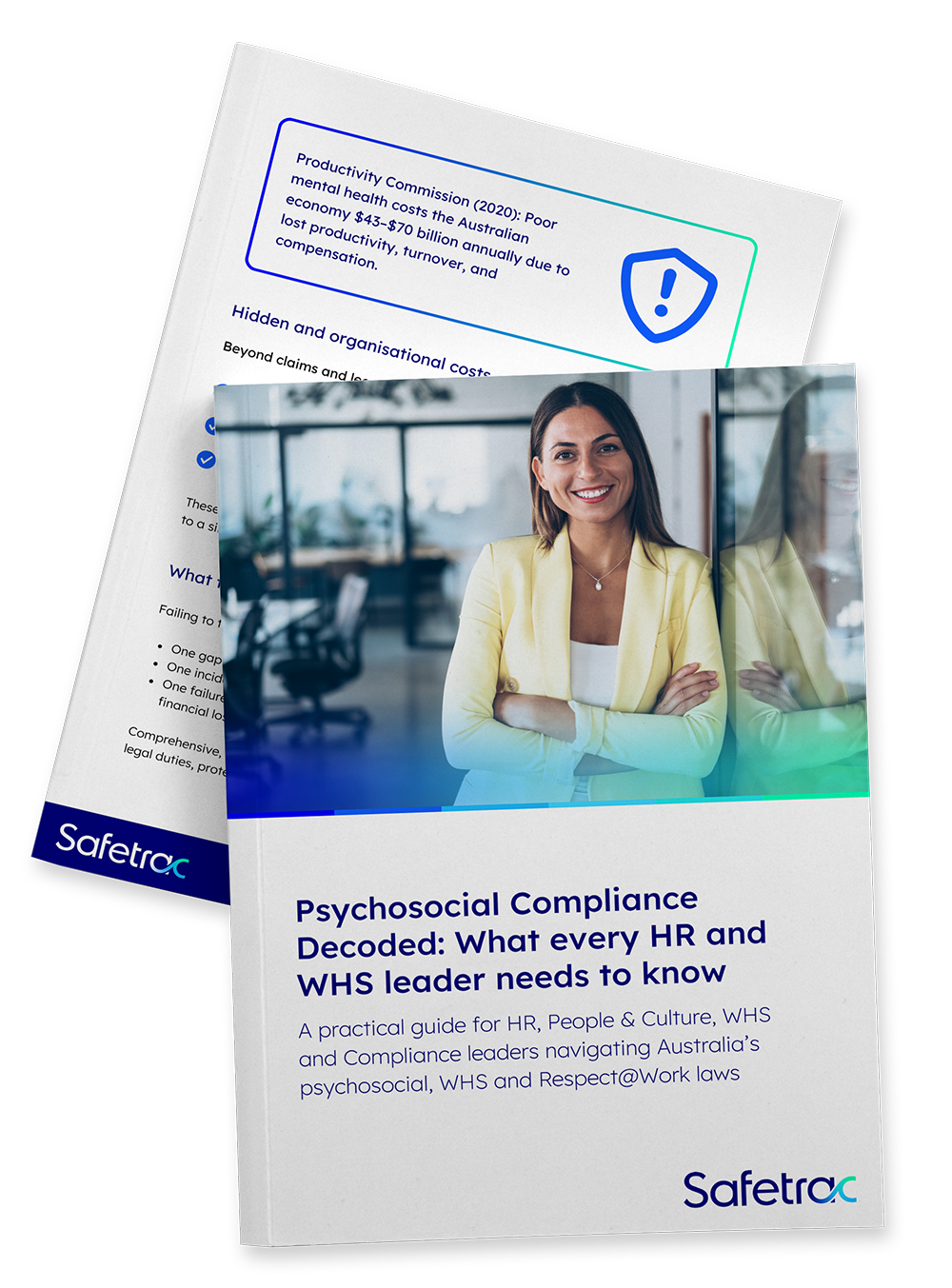
Safetrac’s report, Psychosocial Compliance Decoded, explores how psychosocial obligations intersect with Health and Safety, Respect@Work, anti-discrimination, bullying and harassment, and organisational conduct. It also outlines what practical, role-specific training can look like across employees, managers, executives, HR and Health and Safety teams.
Take a more connected approach to psychosocial compliance
Download Safetrac’s Psychosocial Compliance Decoded guide to explore key obligations, shared responsibilities and role-specific training considerations for employees, leaders, HR and WHS teams.
Get the latest news
Stay updated with the latest news and expert insights on compliance, legislation, and industry trends.