
But customisation also needs to be balanced with legal accuracy, consistency, update management and long-term maintainability. The real question is not just, “Can this be customised?” It is, “What level of customisation will make the biggest difference?”
In this blog, you’ll learn:
- The different levels of compliance training customisation
- How to decide how much customisation your organisation actually needs
- The trade-off between relevance, legal accuracy and maintainability
- How Elevated Learning supports a more flexible approach
Start with the learning need
Before deciding how much to customise, it helps to start with the learning need. Some organisations may only need training to feel more familiar. Others may need content that reflects specific workplace risks, role responsibilities, workforce environments or internal processes. The level of customisation should match the problem you are trying to solve.
For example:
- If learners simply need the course to feel connected to the organisation, branding and terminology may be enough.
- If learners need examples that better reflect their work environment, targeted content changes may be useful.
- If the organisation has complex operational risks or highly specific processes, deeper customisation may be required.
The aim is not to customise everything. The aim is to customise where it improves clarity, relevance and learner understanding.
Level 1: Branding and terminology
For many organisations, light-touch customisation is the most practical starting point. This level helps the training feel familiar without changing the core content.
Branding and terminology customisation may include:
- the organisation’s logo
- brand colours
- company name
- department names
- role titles
- preferred internal language
For example, an organisation may use “People and Culture” instead of “Human Resources”, or “Leaders” instead of “Managers”. These changes may seem small, but they can help learners feel that the course belongs within their organisation.
This level is useful when the standard course already reflects the right compliance topic, jurisdiction, role or work environment, but needs a layer of familiarity.
It can be a strong option for organisations that want a more connected learner experience without adding unnecessary complexity.
Level 2: Targeted content customisation
The next level is targeted content customisation. This is useful when the course needs to better reflect the organisation’s workforce, industry or risk profile.
Targeted content customisation may include adapting:
- examples
- scenarios
- role references
- selected non-legal wording
- workplace terminology
- internal process references
- practical context for different learner groups
For example, a retail workforce may need customer-facing scenarios. A field-based or operational workforce may need examples that reflect site-based risks. Managers may need content that addresses escalation, reporting and response responsibilities. This type of customisation can make compliance training feel more practical and relevant.
The key is to be selective. Targeted content changes should support learning outcomes, not simply make the course feel more bespoke.
A useful question to ask is:
“Will this change help learners understand or apply the content more effectively?”
If the answer is yes, targeted customisation may add real value.
Level 3: Advanced customisation
Some organisations need a deeper level of customisation.
This is usually the case when the organisation has complex operating environments, highly specific risks, multiple workforce groups or internal processes that need to be reflected more directly in the learning.
Advanced customisation may include:
- custom imagery
- tailored scenarios
- voiceover changes
- assessment settings
- quiz question text
- navigation changes
- policy handling
- selected content adjustments
- different pathways for different learner groups
This level may be useful for organisations with distributed teams, high-risk environments, regulated operations or more complex compliance needs. However, advanced customisation should be approached carefully.
The more a course is customised, the more important it becomes to consider how the content will be reviewed, updated and maintained over time. This is especially important in compliance training, where legislation, regulatory expectations, internal policies and organisational structures can change. Advanced customisation can be valuable, but it needs a clear purpose and a clear maintenance plan.
Where Elevated Learning fits
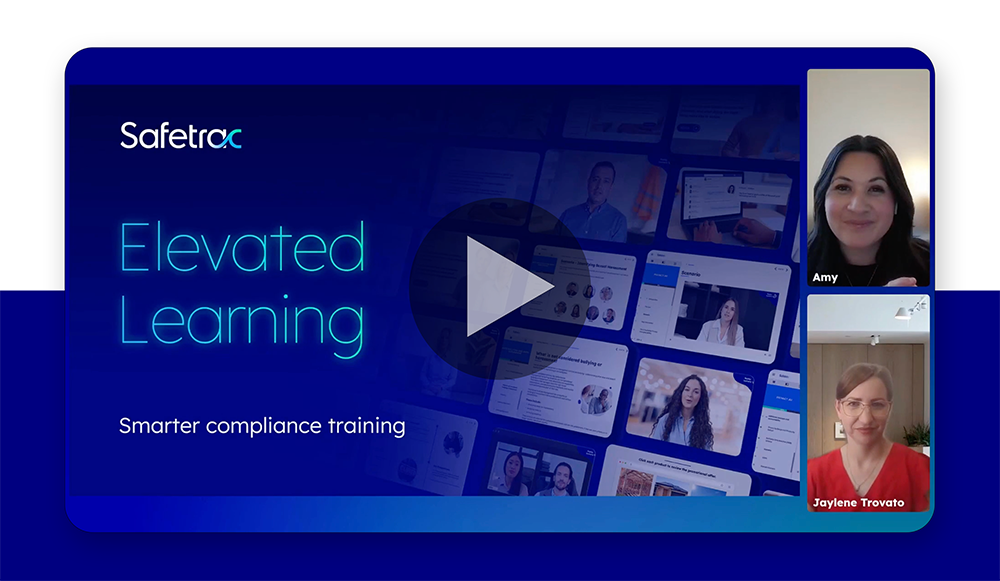
Safetrac’s Elevated Learning has been designed to support a more flexible approach to compliance training customisation.
Rather than starting with a generic course that needs to be heavily rewritten to feel useful, Elevated Learning includes built-in relevance from the beginning.
Courses can be shaped by:
- jurisdiction
- industry
- role
- work environment
- manager and employee responsibilities
- Australia and New Zealand requirements
- different workforce settings, such as office, retail and blue-collar environments
This means learners are not receiving the same one-size-fits-all experience from the outset. A manager can receive content that reflects leadership responsibilities. An employee can receive practical, task-based guidance. A learner in a retail environment can receive examples and scenarios that differ from someone in an office-based or operational setting.
That built-in relevance can reduce the need for heavy customisation. From there, organisations can decide whether they need light-touch branding, targeted content changes or deeper customisation.
Why built-in relevance matters
Built-in relevance is important because it helps reduce the gap between standard and bespoke training. Traditionally, organisations may have felt they needed to heavily customise compliance training to make it feel relevant. But if a course already reflects the learner’s jurisdiction, role, industry and work environment, the amount of additional customisation required may be much lower.
This gives Learning and Development teams more flexibility. They can focus customisation where it adds value, rather than using it to fix a course that feels too generic.
For many organisations, this creates a more sustainable approach. The course can still feel relevant to learners, while remaining easier to update and manage over time.
How to decide what level is right
A practical way to choose the right level of customisation is to work through a few key questions.
1. Is the standard course already fit for purpose?
If the course already reflects the right jurisdiction, role, industry and learner environment, heavy customisation may not be needed.
Light branding and terminology alignment may be enough.
2. Do learners need internal language to recognise the content?
If internal terminology is important to the learner experience, Level 1 customisation may be appropriate.
This helps the training feel more familiar without changing the substance of the course.
3. Are there specific workplace risks or processes that need to be reflected?
If learners need examples or scenarios that reflect real workplace risks, Level 2 customisation may be useful.
This can help bridge the gap between compliance concepts and practical application.
4. Are there complex operating environments or learner groups?
If the organisation has multiple workforce settings, high-risk environments or very specific role requirements, Level 3 customisation may be worth considering.
This is where deeper tailoring can support a more relevant and effective learning experience.
5. Who will maintain the customised content?
This question is often overlooked.
Any customised content needs to stay accurate. If legislation, policies or processes change, those custom elements may need review.
Before customising, it is important to consider how the course will be maintained over time.
The balance between relevance and maintainability
The best customisation strategy is not always the most extensive one. For many organisations, the strongest approach is a balanced one: use legally maintained content where consistency matters, and customise where relevance matters.
That might mean:
- using a legally maintained course as the foundation
- applying branding and terminology to improve familiarity
- adapting selected examples or scenarios where they improve relevance
- keeping legal content stable and version-controlled
- avoiding unnecessary rewrites that create future maintenance issues
This approach gives learners a more connected experience while helping Learning and Development, Human Resources, legal and compliance teams manage training more efficiently.
A smarter way to customise compliance training
Customisation should not be an automatic decision. It should be a deliberate one. The right level of customisation depends on the learner audience, compliance topic, workplace risk, internal review capacity and long-term maintenance needs. The level of customisation should reflect the organisation’s needs. A light-touch approach may suit some teams, while targeted content changes or advanced customisation may be more appropriate where roles, risks or operating environments are more complex.
Safetrac’s Elevated Learning is designed to support this flexibility.
It provides built-in relevance through role, industry, jurisdiction and work-environment options, while allowing organisations to add further customisation where it makes the learning more effective. The goal is not to make every course fully bespoke. The goal is to deliver compliance training that is relevant, legally maintained and easier to manage.
If you’re looking for a more sustainable approach to compliance training, get in touch to see how Elevated Learning can support your workforce.
Discover Elevated Learning