
Respect@Work and Beyond: What organisations need to do now
- Updated
- 4 min
This blog explains what has changed under Respect@Work and what organisations must do to meet their current obligations. If your workplace culture has not been reviewed since 2022, your organisation may no longer be aligned with Australian legal expectations for preventing workplace sexual harassment and managing psychosocial risks.
Historically, many organisations have treated the absence of complaints as an indicator of a safe workplace. However, the Respect@Work reforms challenge this assumption, recognising that underreporting does not necessarily reflect a healthy or respectful workplace culture.
Under Australian law, organisations now have a positive duty to take proactive steps to prevent workplace harm before it occurs. This includes identifying risks such as sexual harassment and managing them effectively, recognising that these risks are also treated as psychosocial hazards under WHS obligations. The Australian Human Rights Commission (AHRC) can assess whether organisations are taking reasonable and proportionate steps to comply with this obligation.
1. Understand your positive duty obligations
The introduction of positive duty under the Sex Discrimination Act 1984 (Cth) represents a shift from reactive compliance to proactive risk prevention. Employers are no longer expected to respond only after incidents occur. Instead, they must actively identify, assess and eliminate or minimise risks of unlawful workplace behaviour.
This applies across all aspects of work, including workplace culture, leadership practices, communication systems and digital environments.
2. Identify and manage psychosocial hazards
A hostile or unsafe workplace culture rarely arises from a single incident. It typically develops through repeated patterns of behaviour, informal norms and unaddressed organisational practices that can contribute to psychosocial risks.
Under Safe Work Australia guidance, employers are required to manage psychosocial hazards in the same way as physical hazards. For a deeper understanding of how psychosocial hazards intersect with Respect@Work obligations, listen to our podcast with Dr Anna Cody, Sex Discrimination Commissioner at the Australian Human Rights Commission, Understanding Psychosocial Hazards and Respect@Work Laws.
Key psychosocial risk indicators include:
- Workplace behaviours: Repeated jokes, comments or conduct that may be exclusionary or disrespectful.
- Digital and physical environments: Communication channels or shared spaces containing inappropriate or marginalising content.
- Workplace structure: Informal decision-making processes or power dynamics that limit inclusion or equity.
- Response culture: Inconsistent or absent responses to inappropriate behaviour, leading to normalisation.
Addressing these risks requires ensuring respectful workplace behaviour is supported by leadership, systems and day-to-day operations.
Sources and regulatory guidance:
SafeWork Australia
https://www.safeworkaustralia.gov.au/safety-topic/hazards/psychosocial-hazards
AHRC – Positive duty guidance materials for organisations and businesses https://humanrights.gov.au/resource-hub/resources-for-organisations-businesses
3. Apply the seven standards of positive duty
The Australian Human Rights Commission outlines seven standards that organisations must apply to meet positive duty obligations and prevent workplace sexual harassment.
- Leadership: Active commitment to preventing unlawful conduct, including sexual harassment, and promoting respect at work.
- Culture: Establishing a workplace culture that does not tolerate sexual harassment, sex discrimination or victimisation.
- Knowledge: Ensuring employees understand expected behaviours, rights and legal responsibilities.
- Risk management: Identifying, assessing, and eliminating or minimising risks of workplace harm.
- Support: Providing appropriate support to individuals who experience workplace harm.
- Reporting and response: Ensuring safe, accessible and effective reporting and complaint handling systems.
- Monitoring, evaluation and transparency: Regularly reviewing the effectiveness of prevention measures and improving systems over time.
Central to these standards is a person-centred approach to workplace complaints. This requires organisations to prioritise safety, wellbeing and fair process when responding to concerns, rather than focusing solely on liability management.
4. Implement a structured risk management framework
Effective compliance requires a structured approach to psychosocial risk management, aligned with both positive duty and WHS obligations in Australia.
A practical implementation framework includes:
- Risk identification and assessment: Systematically identifying psychosocial hazards such as exclusion, poor workplace relationships and misuse of power.
- Controls and reporting systems: Implementing clear, trusted and accessible reporting mechanisms with timely and fair responses.
- Capability and training: Building workforce capability through training in respectful workplace behaviour and bystander intervention.
- Governance and review: Ongoing monitoring of workplace culture, risk controls and incident trends to ensure continuous improvement.
These controls must be treated as ongoing operational practices, not one-off compliance activities.
5. Build and maintain a respectful workplace
Building a respectful workplace requires ongoing commitment from leadership and consistent application of prevention-focused practices.
Organisations that proactively manage psychosocial risks and ensure respectful behaviour is consistently applied through workplace systems are better positioned to improve employee wellbeing, strengthen trust and reduce the risk of workplace harm.
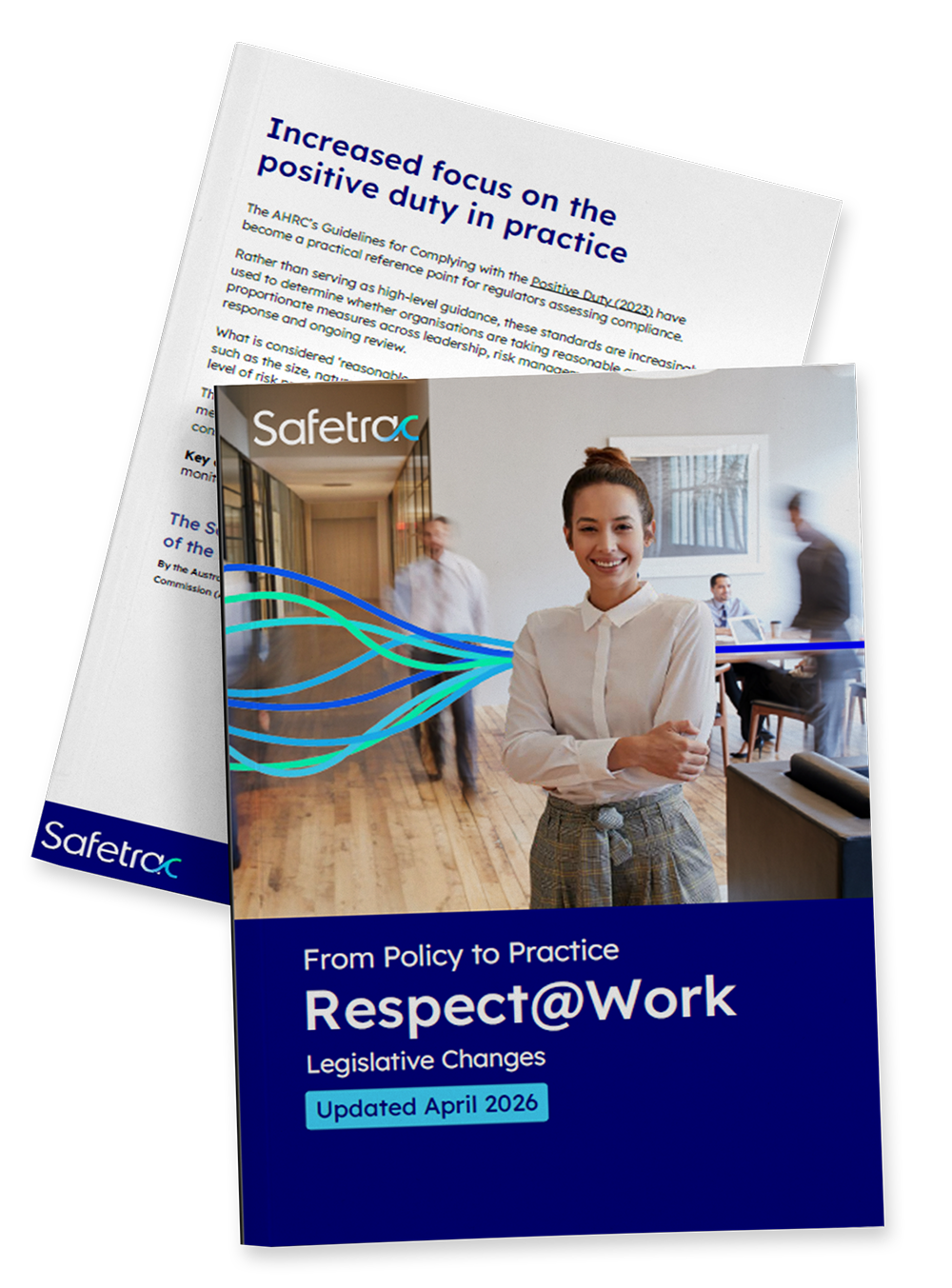
Respect@Work: Are you keeping up?
If you haven’t reviewed your workplace culture since 2022, you may already be falling behind. Here’s what’s changed — and what to do now.
Get the latest news
Stay updated with the latest news and expert insights on compliance, legislation, and industry trends.